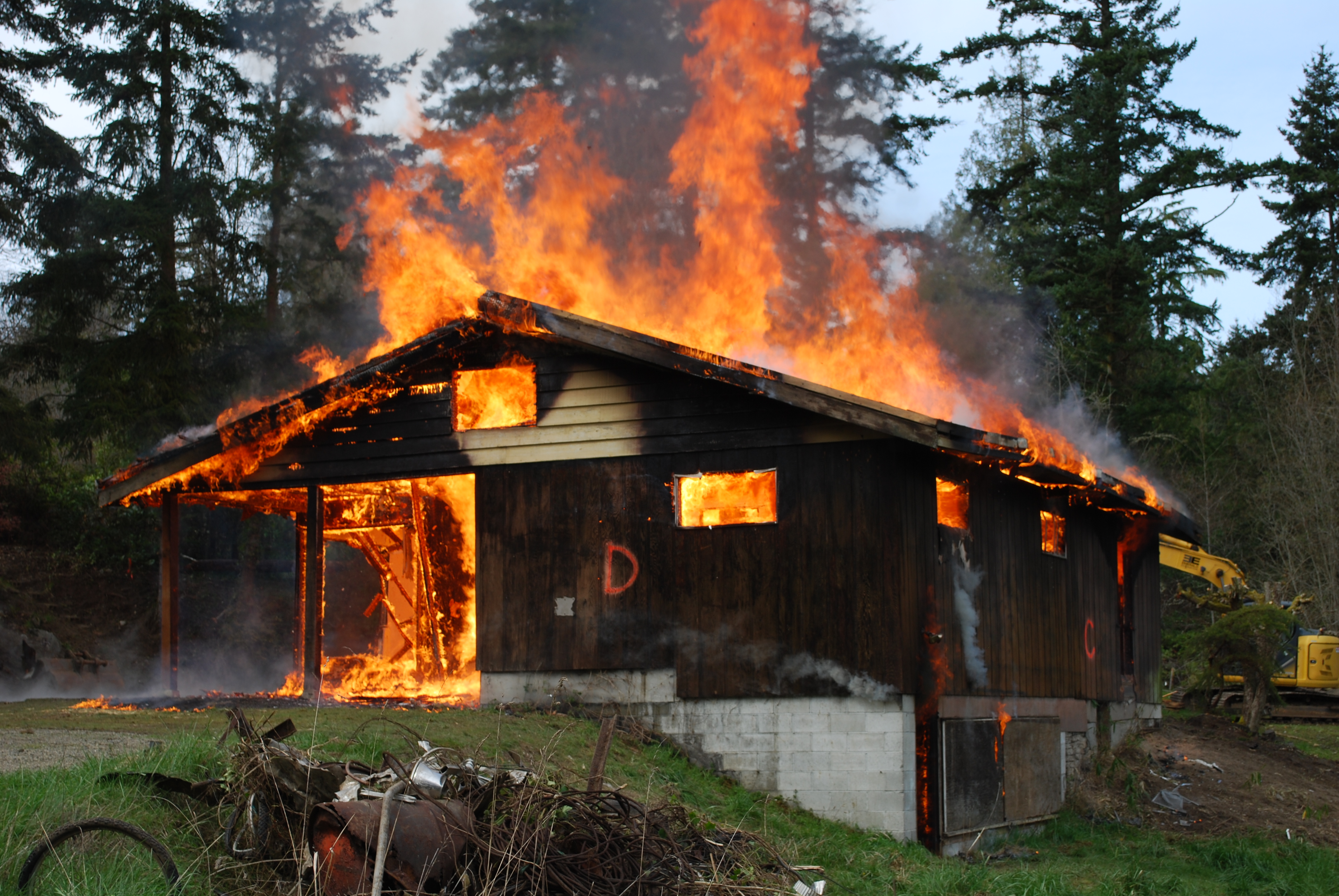
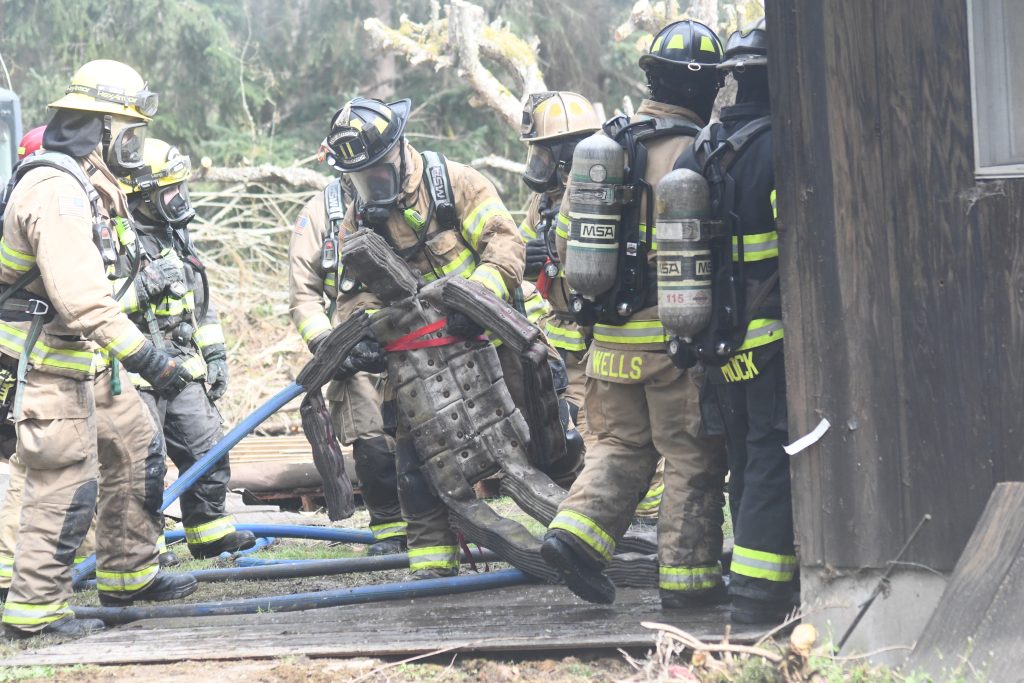
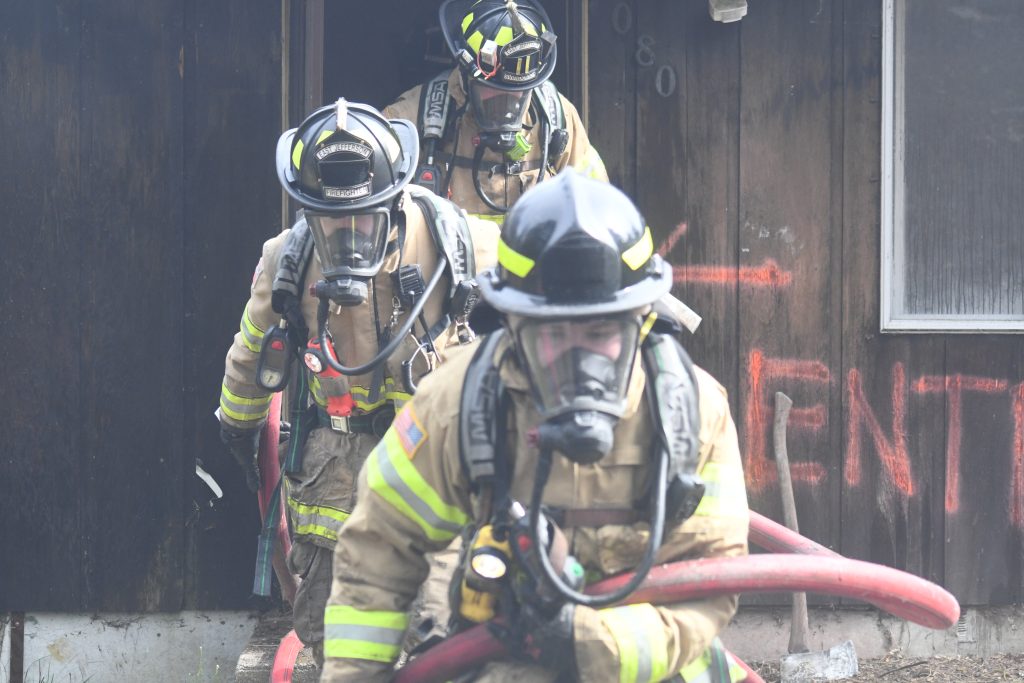
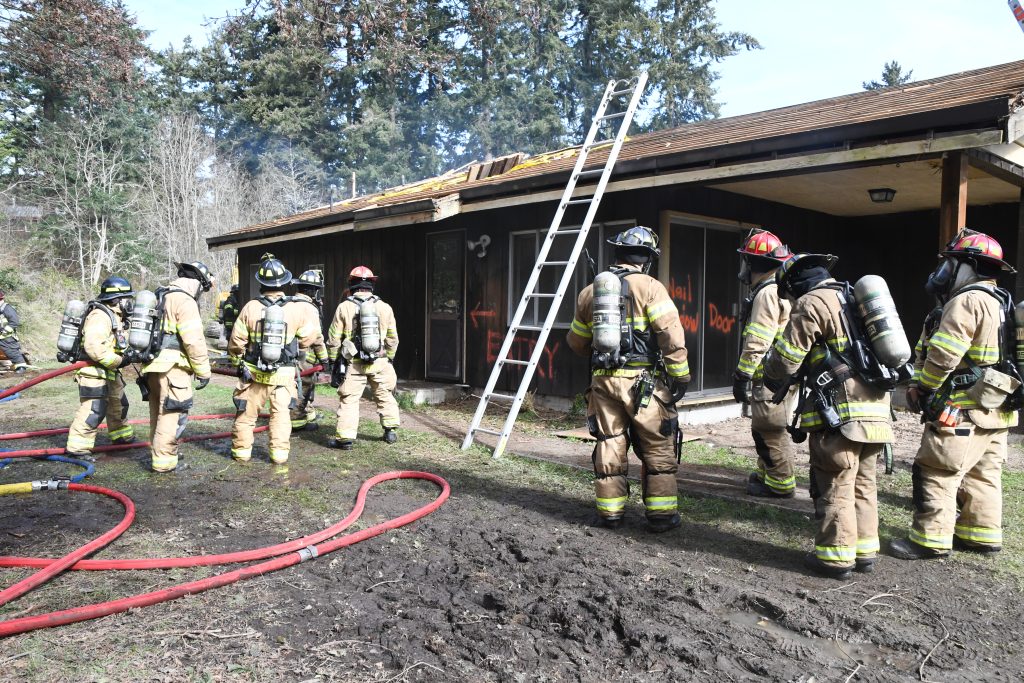
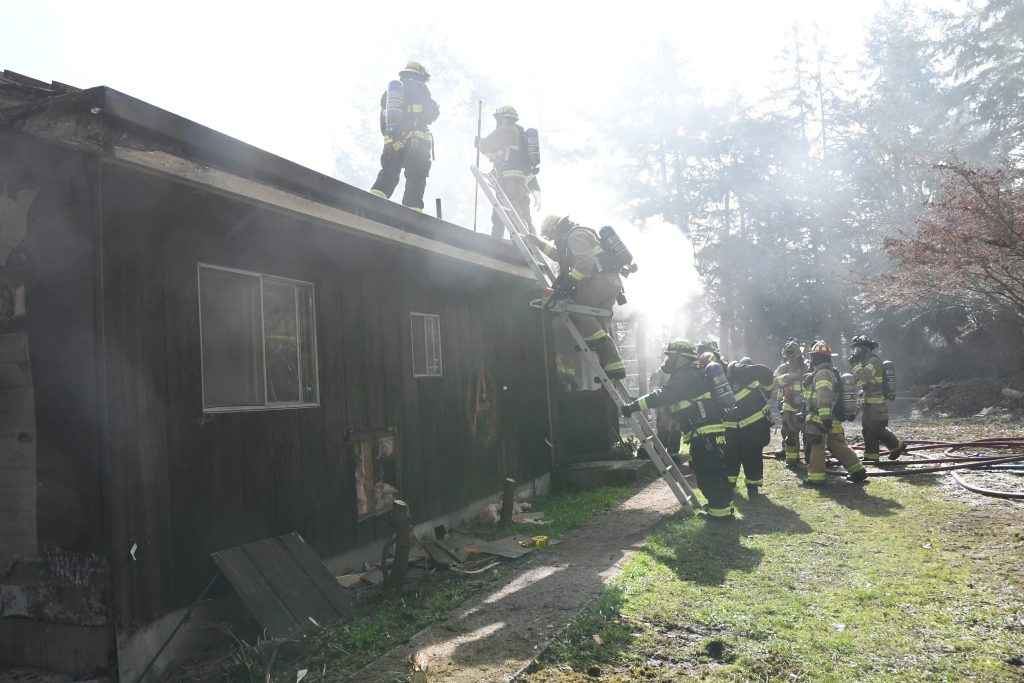
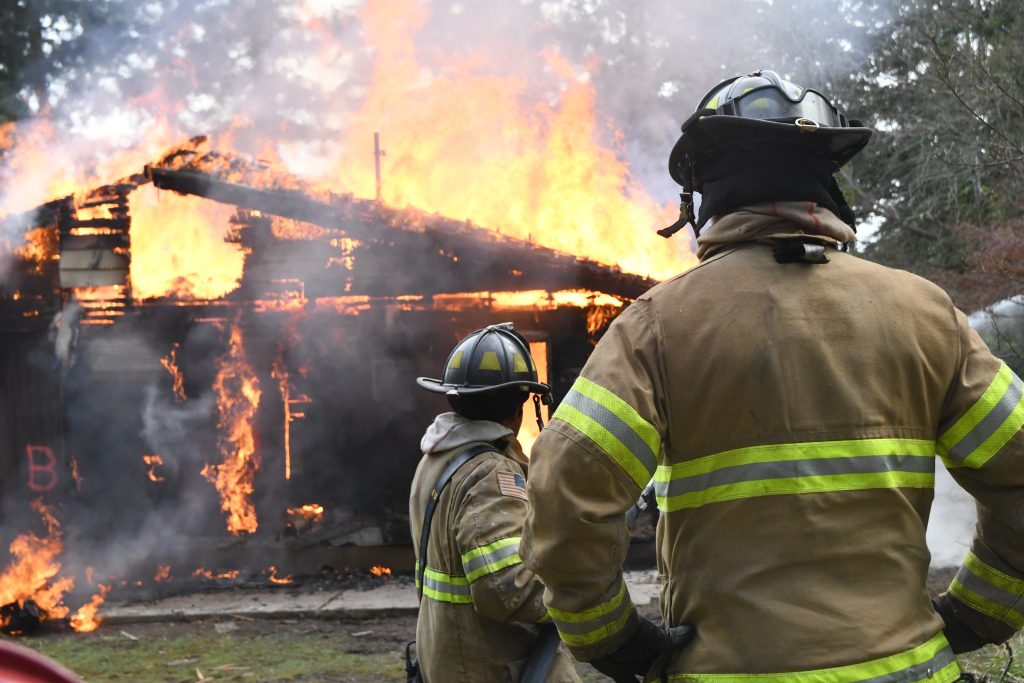
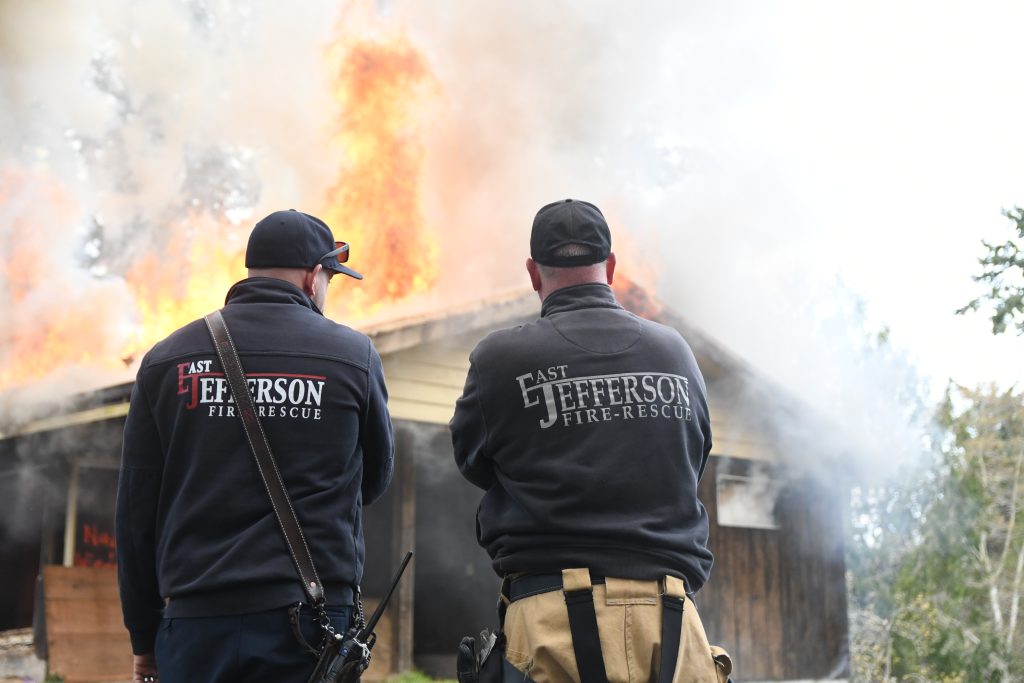
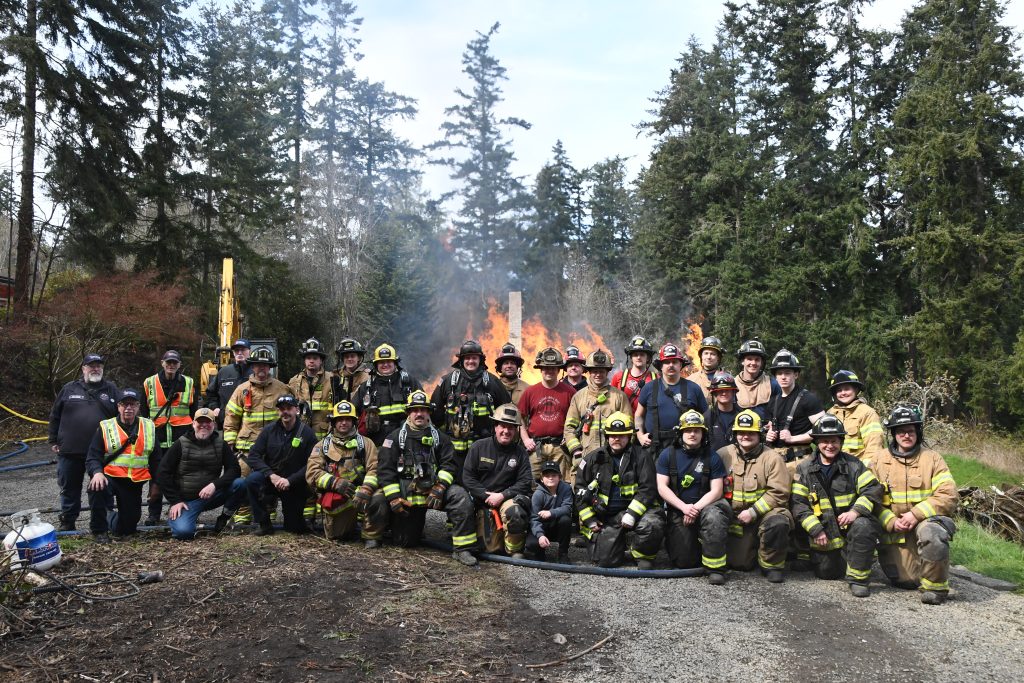
On Tuesday March 31, 2026, EJFR completed live fire training at an abandoned home on Umatilla Road, between San Juan Avenue and Silver Street. Earlier this year, the property owner approached EJFR about a planned demolition of the structure and offered the structure for destructive training for our firefighters. Together with the property owner, EJFR completed and analysis and review of the structure for a training burn.
We would like to express our tremendous appreciation to the property owner, the neighbors on Umatilla Road and beyond, the City of Port Townsend, our community partners, our tremendous firefighters, and our invaluable volunteers for their generosity, support, and hard work in making this event so successful!
EJFR recognizes the impacts of a structure in the community, The benefits and outcomes of this training opportunity have lead to more effective and well-trained emergency responses in the case of unplanned fires. The value of this training cannot be overstated.
Frequently asked questions about this event:
How did the property owner donate the property?
The property owner reached out to EJFR following a recommendation from his demolition contractor. Necessary permitting and actions in alignment with Olympic Clean Air Agency (ORCAA) requirements and City of Port Townsend Demolition Permitting were all competed. The requirements include testing and abatement of any hazardous materials, disconnection of all utilities, and removal of remaining appliances, furniture, room contents, and carpeting.
How often does EJFR do live fire training?
Firefighters are required to maintain live fire training credentialing every three years per National Fire Protection Association (NFPA) 1001 Standard for Fire Fighter Professional Qualifications and WAC 296-305 Safety Standards for Firefighters. EJFR typically utilizes our Fire Training Center at Station 2 on Jacob Miller Road in Port Townsend for annual training for one of three rotating shifts each year. Our training center is equipped with metal shipping containers where small fires are used to reinforce hose deployment and fire suppression technique training. These containers are durable, but do not reflect a standard home or business structure very well.
How was this different than doing live fire training at Station 2?
The benefit of doing live fire training in a structure like this is that it provides an unfamiliar, but typical, residential configuration where more complex training opportunities including search and rescue, firefighter safety and recovery, smoke control and ventilation techniques, breaching of wall and doors, and analysis of fire and smoke flow patterns are possible. These opportunities do not present themselves in the fire training center configuration.
Secondly, the level of control of the environment allows for focus on repetitive, technical training by multiple teams and reduced exposure to toxic chemicals released by burning of modern interior furnishings. True structure fires do not allow for such repetition and have significant toxic exposures.
What standards were followed for this event?
EJFR complied with NFPA 1403, Standard on Live Fire Training Evolutions, Acquired Structures (Chapter 5), WAC 296-305 (Safety Standards for Firefighters), and ORCAA permitting requirements.
What type of structure was burned?
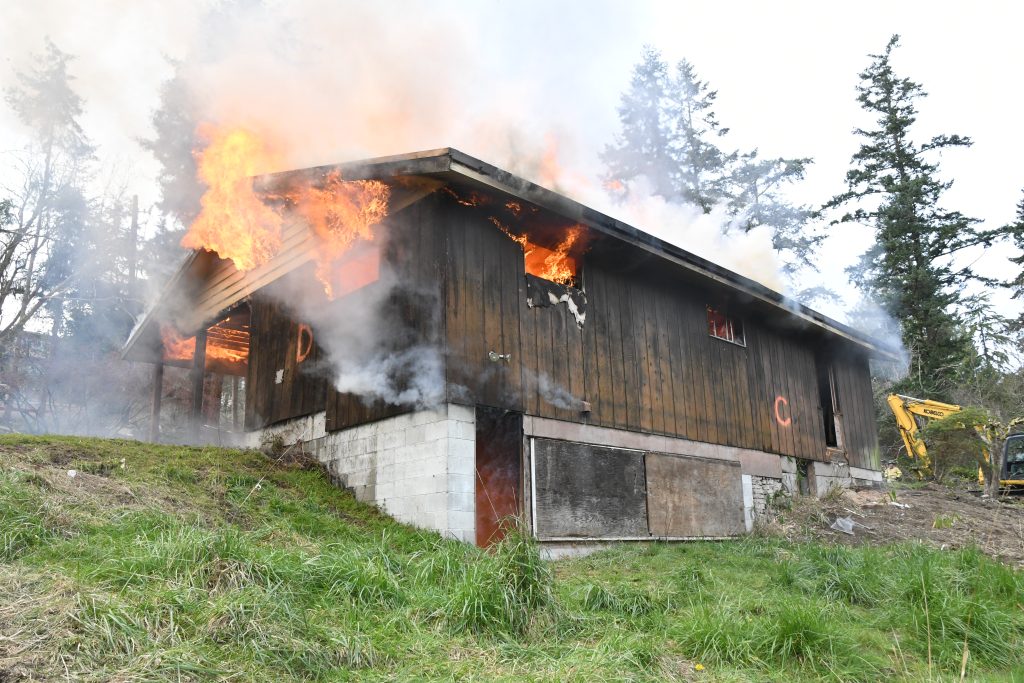
According to Jefferson County records, the structure was built in 1936 and was a wood framed, single story building with a daylight basement. The building was no longer a safe structure for human habitation.
Were the proper permits for demolition been filed?
Yes, the property owner applied for and received an approved City of Port Townsend demolition permit and an approved ORCAA demolition notification permit.
How was the structure prepared to mitigate hazardous materials?
Permitting required that hazardous materials testing be performed prior to demolition. This testing by a qualified contractor found that the textured ceiling in portions of the home contained 3% asbestos, which was safely abated and removed. No other hazardous materials were identified. The City of Port Townsend permit requires that all propane, liquified petroleum gas, electrical, and other hazards were also removed from the site prior to demolition.
What materials were burned?
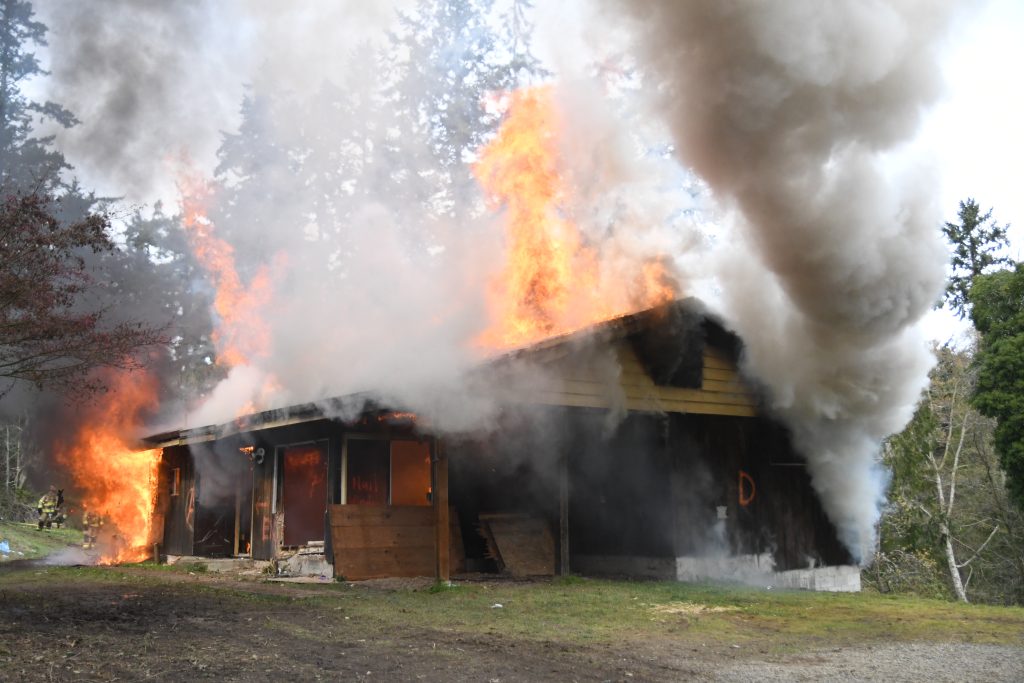
Primarily wood and natural materials, including wood framing, siding, and roofing materials. The primary ignition fuels were wood pallets placed inside, with controlled ignition from propane torches. Some residual electrical wiring, galvanized steel piping, cellulose insulation, and roofing materials were also involved. Additionally, due to abandonment and decay, the materials and the structure offered no recycling or reuse value.
What types of training will be done?
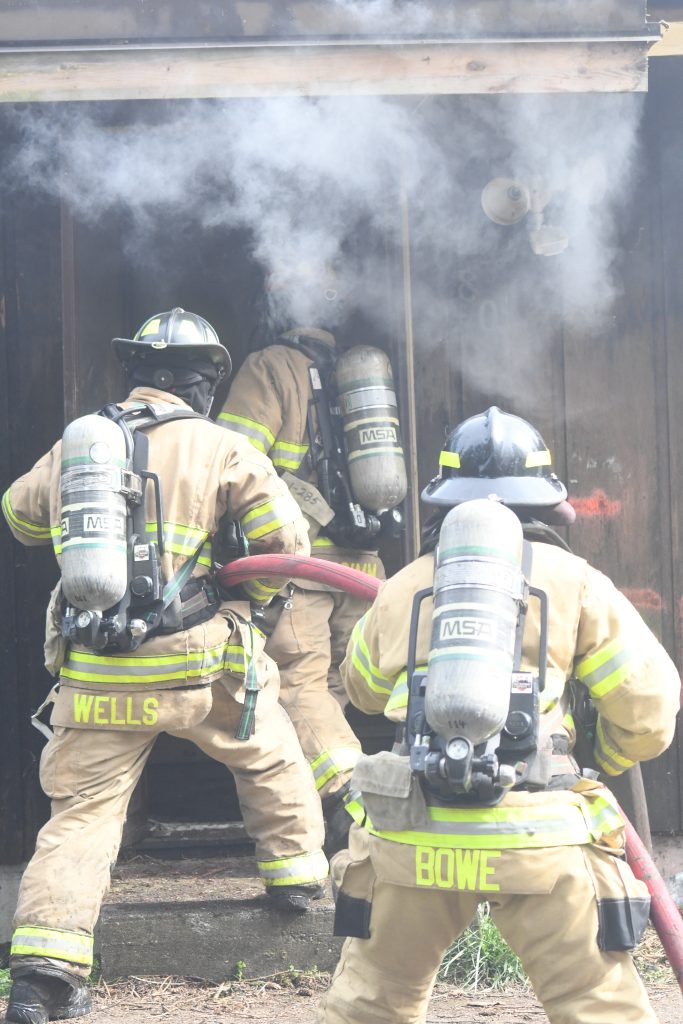
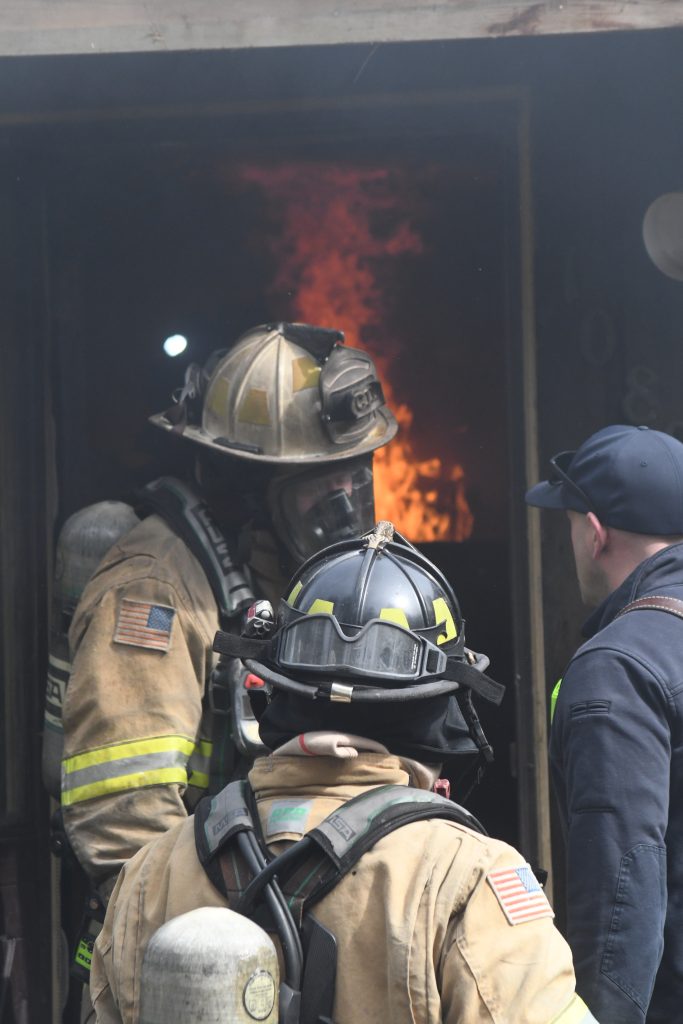
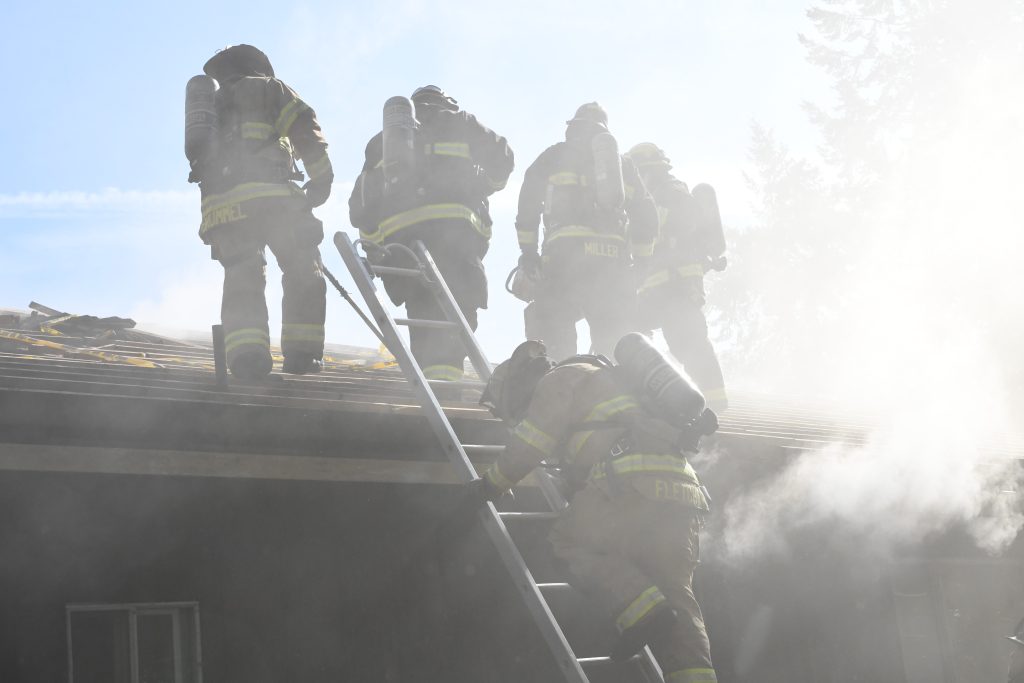
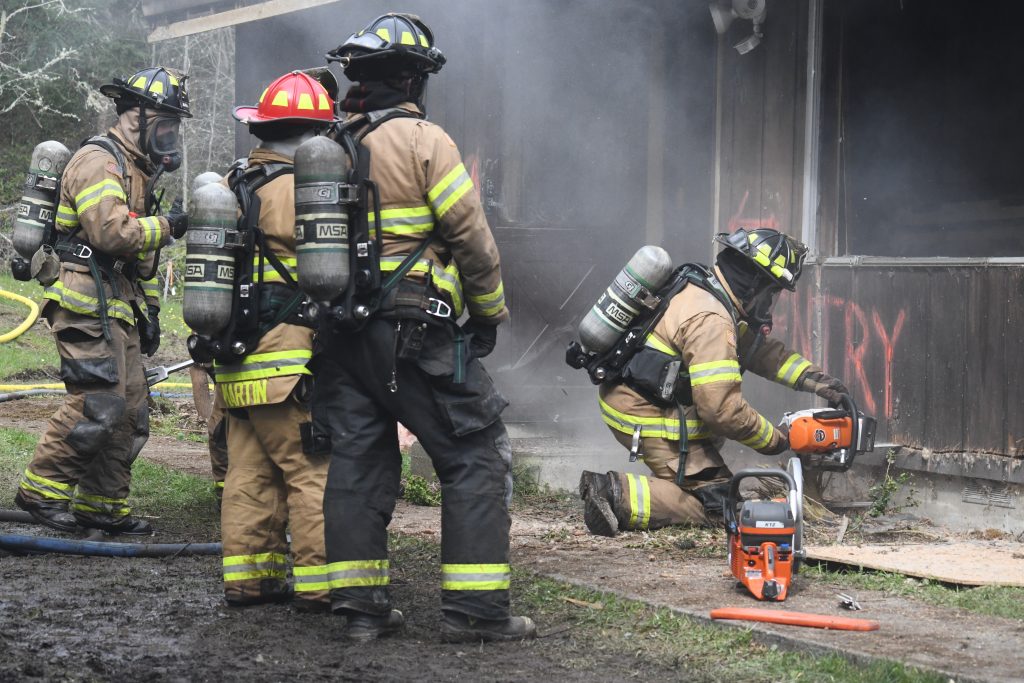
Training included search and rescue, fire hose deployment, incident size up, ground ladder deployments, rapid intervention training (RIT), wall, window, and door breaching, and cutting ventilation holes in walls and roof. The final day included live fire training with repetitive ignition and suppression of controlled fires in various rooms as well as interpreting interior fire behavior. A final full burn of the structure without suppression completed the training.
What equipment was on site?
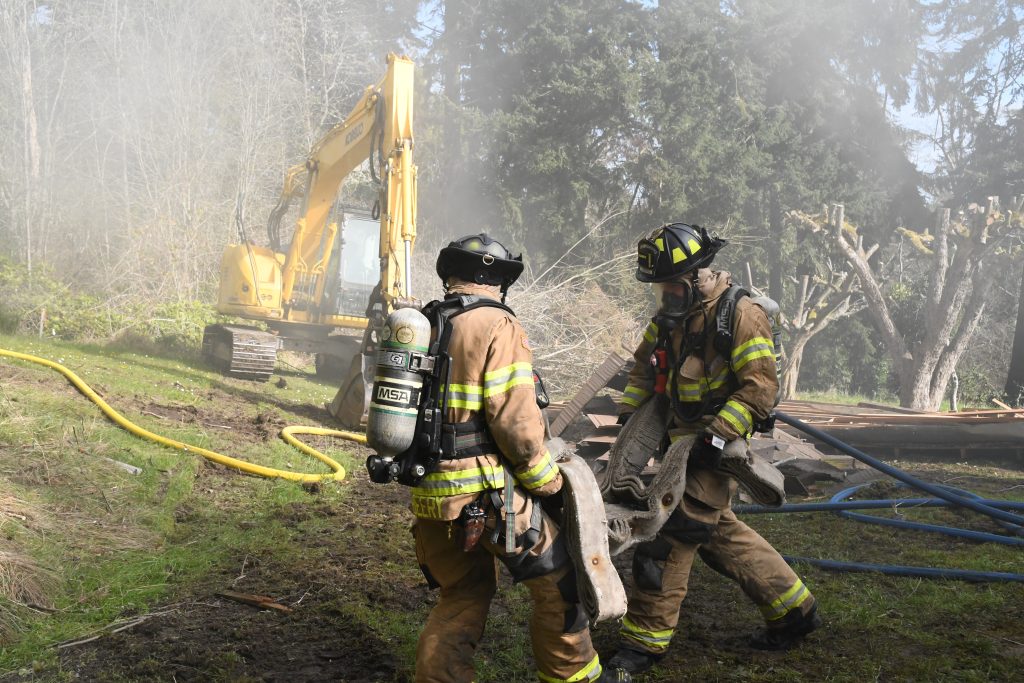
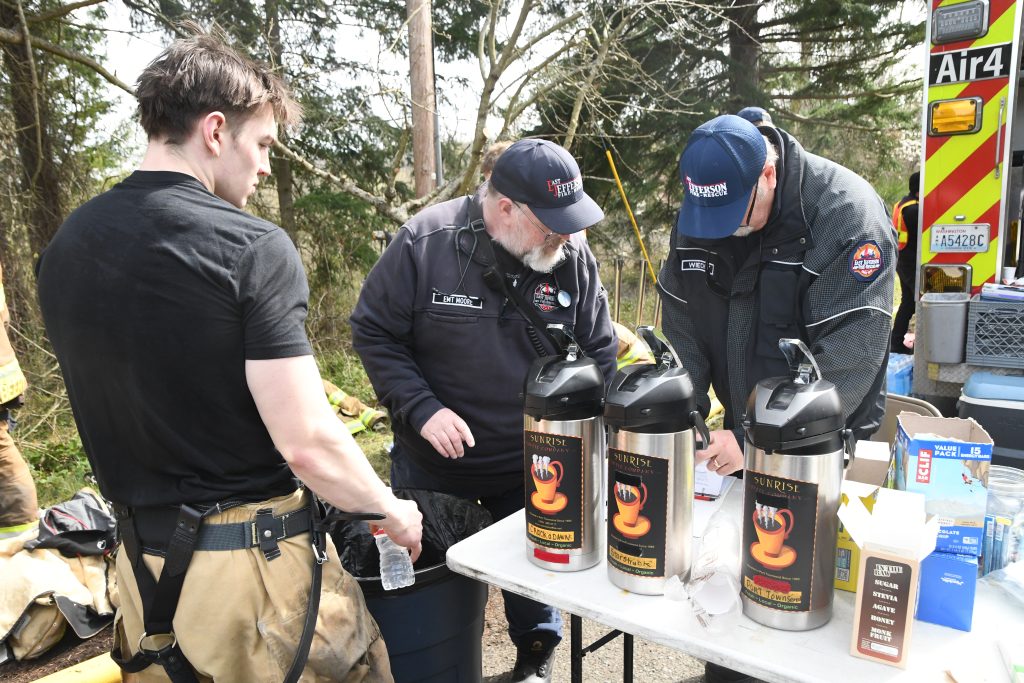
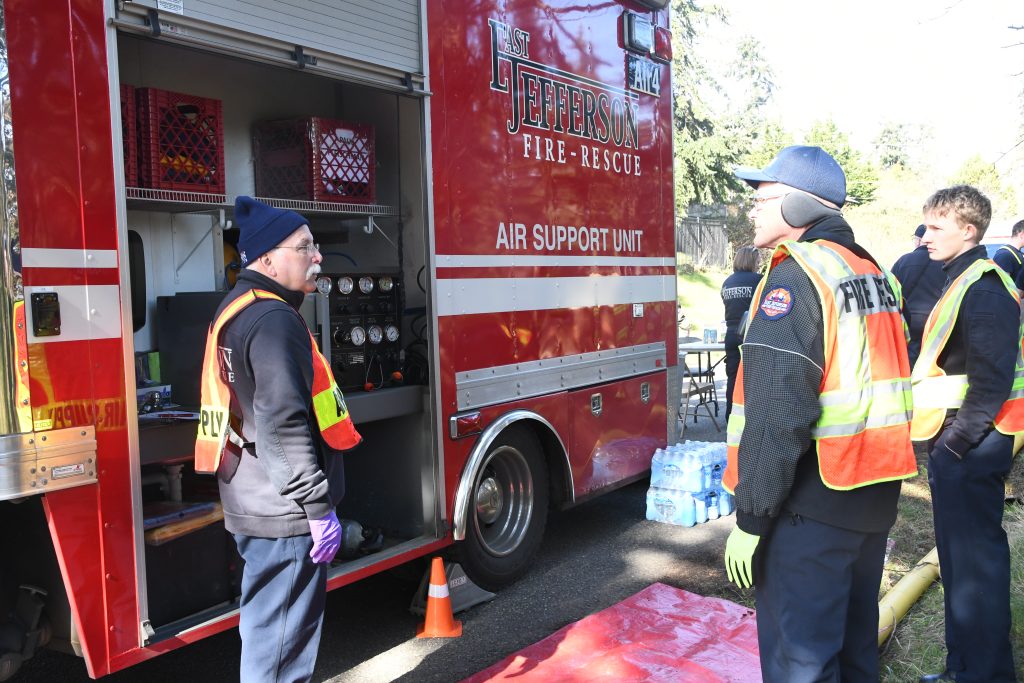
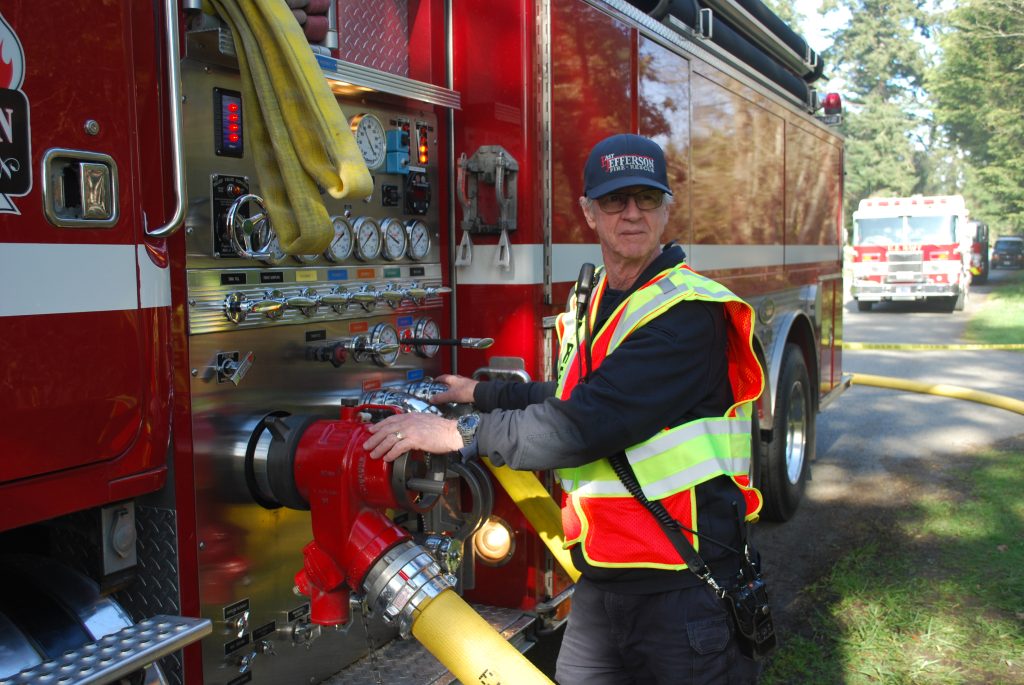
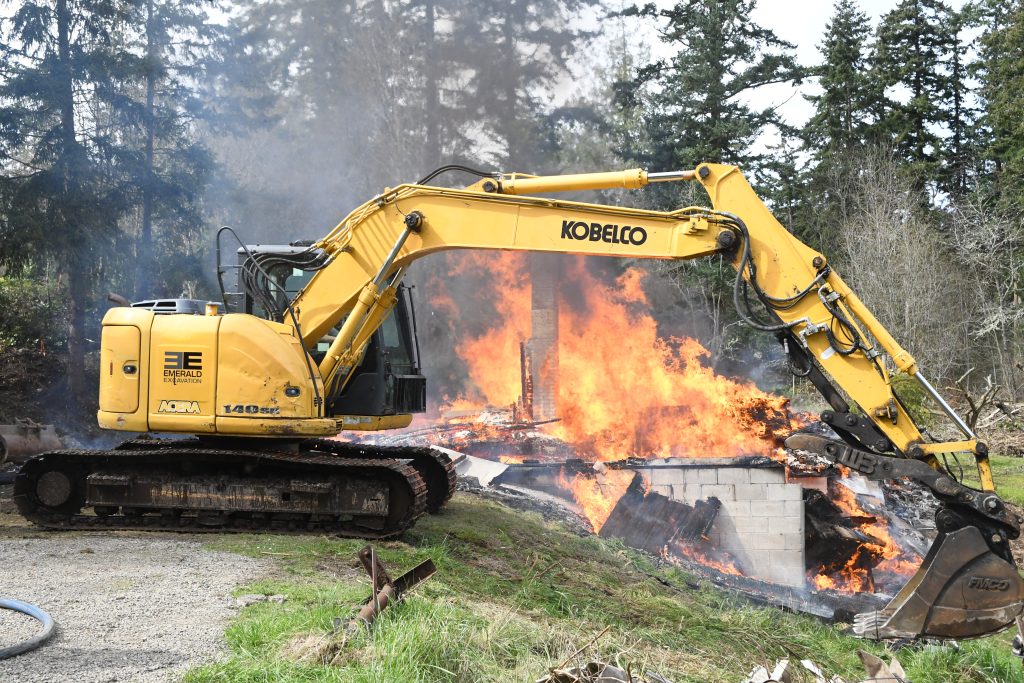
Apparatus on site included Tender 6 as the primary water supply source and Tender 4 as backup water supply source. Hose lines from both apparatuses was used as primary and secondary suppression lines. Both tenders carry 2,500 gallons of water each and were also be connected to nearby fire hydrants. Air 4 which provides rehabilitation and air bottle refill, as well as Aid 5 for medical care and monitoring, provided necessary support to firefighters. A third-party excavation company was also on site with heavy equipment to assist with control of the structure as the demolition evolved.
How was the structure made safe for firefighters?
EJFR prepared an Incident Action Plan (IAP) that included an overall site safety plan. An Incident Safety Officer was assigned to oversee all safety throughout the training. Part of the safety plan was establishing and identifying emergency escape access, adhering to a strict communications plan, and reinforcing constant situational awareness for all participants.
How will water runoff be controlled?
Since this was a destructive training burn, there was limited water use for extinguishment, so little water runoff occurred.
What were the requirements for weather conditions?
We monitored the forecast for days prior and assessed the weather conditions on the day of the training burn. Winds were light, with mild temperatures and partly cloudy skies.
How were nearby vegetation and structures protected?
As part of the IAP, EJFR placed several staffed hose lines in place to control any embers that may have traveled outside the fire scene. With favorable weather conditions and a temperate climate, we do not experience significant ember travel.
Could EJFR respond to other emergencies when this event was occurring?
This training event did not disrupt our normal daily staffing and commitment of responding to 911 emergencies. All EJFR stations remained staffed at full capacity. Personnel assigned to the training event were not on shift that day.
How does training like this help our insurance rating?
The Washington Survey and Ratings Bureau (WSRB) requires over 200 hours of fire training annually for firefighters. This event supports meeting those requirements and we receive additional points for live fire training. EJFR continues to enhance equipment, training, and public education to continue improving our insurance rating and home insurance premiums.
What happens to the property and structure after the burn?
With heavy equipment already on site, the property owner will begin removing remaining materials within a few days.